Elon Musk froze culture and we must unfreeze it.
The reason for forever sequels, Billboard Chart freeze, nostalgia pop, COVID Denial and the rising price of RAM is all the same -- and we cannot let it continue if we want to survive.


Audio Version above, and you can subscribe to our Podcast feed here.
Everything in this article is alleged, but not alleged by me, alleged by other people. This is an offshoot piece from a much more detailed piece I'm working on about the AI bubble and how it's affecting pop culture. If a major publication doesn't buy it off me, you'll be getting it as a major deep dive in the new year. Please consider supporting us with a subscription, £5/mo, if you can.
the myth.
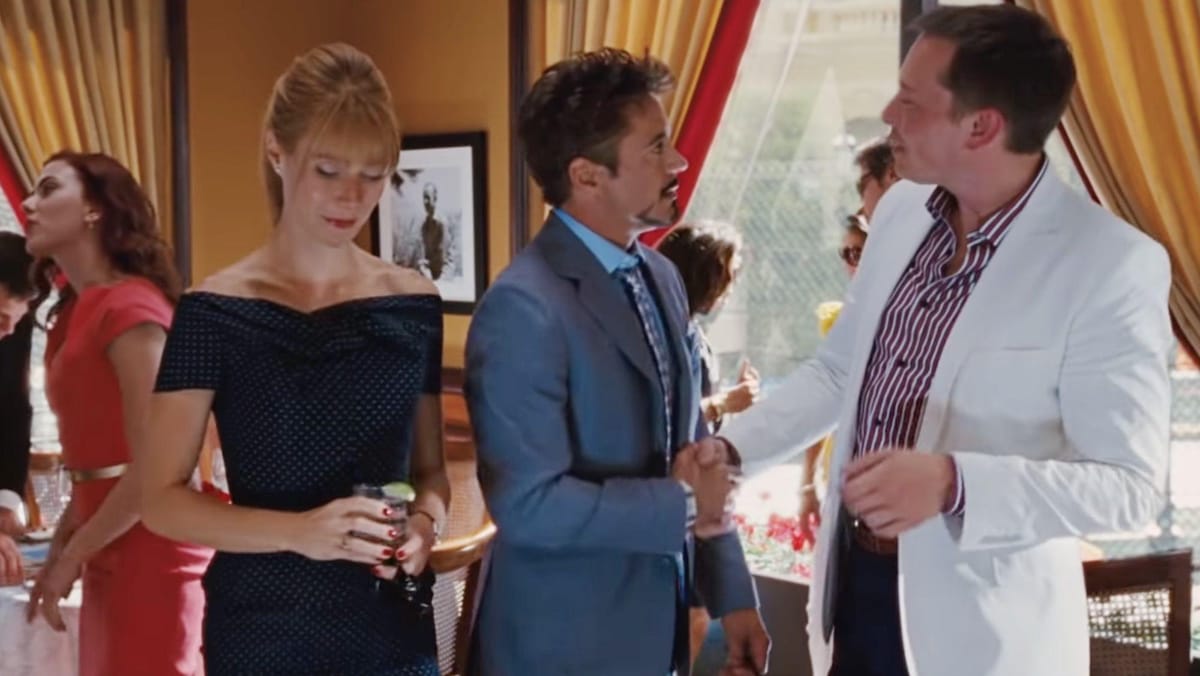
The sequel to the sleeper hit, Iron Man 2 had it's own structural issues - but one thing audiences and intellectuals alike did the Leo DiCaprio Meme at was a special little cameo from a guy who'd only just started starring in the headlines as "The Real Life Iron Man" at the time. The cameo was quaint, and the guy was also "based", on paper. His name was Elon Musk, and we kind of loved him. You can even find evidence of me defending him in a very well known podcast in 2019.
Much of what we believed to be false at that time was actually relatively factual - he didn't buy Tesla from underneath the owners (they'd barely developed patents when he boarded the company), and he had indeed built an app that got subsumed into Paypal, so he showed at least some technical know-how, once upon a time, back when his brain wasn't cooked on K, ALLEGEDLY. His dad owned a diamond mine or something, but it was a bit of a flop, apparently. (I don't recommend the source podcast here as they've gotten a lot wrong in the past, but their two-parter on the Musk Biography is solid.)
In the Obama era, he was seen as kind of a hippie for doubling down on a green future we all said we wanted but no one was making any moves toward. During the first Trump presidency, before the novel Coronavirus reshuffled the very fabric of reality, he actually was a generally cogent and legible source of information. One of the big things we all knew, though, was that his power came from his people - the same people he wasn't allowing to unionise. This was always a major sticking point for me. It was clear that Elon was battery pack powered by the incredibly talented technicians all around him, and yet he was unable to let them advocate for themselves in the most societally stable way.
Regardless, this was the myth – Musk is taking the unpopular, and potentially unprofitable route, subsidised by the US Government (welfare kween) and was going to help usher in a new future - the one we'd all agreed we needed to build. Musk is not the only figure we looked to as building the future at the time, but he was one of the most visible and prominent.
...and then, when we needed a futurist the most, he dived off a cliff, metaphorically, and signalled that there would be no future worth having on the horizon.
the fall.
COVID bricked a lot of people – no doubt you have someone in your life that made sense to you in 2019, who is completely illegible now. Whether that's due to them falling down the Alt-Right pipeline, or the eugenics pipeline, or the "not political" valley, or the "it's not that deep" hard shoulder, or the escapism roundabout - there were a lot of ways people coped with this international incident.
If it needs plain stating, let me state it plainly - a global viral airborne pandemic was a catastrophe governments around the world had been anticipating. "We were due". What we were not prepared for was Reality TV star and 80's Personality Donald Trump being the President of the United States, and therefore the head of state most in charge of the global response. I still contend that with adequate US leadership, COVID could have been drastically less deadly, and potentially could have been contained to the cities most exposed to the spread from China at the time. With a few stately press conferences from the Oval, and a science-first instead of "behaviour"-first approach, major powers could have saved the lives of millions, and the health of millions more.
However, we were left in the hands of an administration that had its hair on fire on a good day. That lack of leadership from the only global superpower caused a trauma, dare I say a rip in the fabric of reality – and this may have been the moment that killed the very concept of Globalism for good. That rip, caused by everyone learning at once the fundamental fear and dread of being completely alone, inspired very different chemical responses and reactions from each individual on Earth. If I may, I encourage you to ask yourself what your reaction was, and if you're comfortable with the ways the global COVID response changed you.
This was the main event that turned me against Elon - prior to this, I had tempered my skepticism of him with hope, and genuinely thought he was someone worth listening to. However, almost immediately, Elon's reaction to COVID signalled his overarching hyper-capitalist dis-ease with silence. With his factories unable to operate under lockdown mandates, he spiralled. Without the raring noise of go-go-go, his brain broke apart into shreds like a vinyl glove in Acetone. This was only accelerated by the acquisition of Twitter, which he promptly drove into the ground, proving he'd potentially never actually been intelligent enough to predict, or build, a future in the first place.
This is the era of Elon we see today - and it's the most hopeless version of a Futurist we could possibly imagine. I don't need to recount his antics - you've witnessed them. Now, the future he seems to be building in public is White Supremacist, AI-driven, anti-worker, anti-environmentalist and, most importantly, inevitable. With the wealth he's acquired on the balance sheet, and the allies he's technically got in the governments of multiple countries, we're told he can't be stopped. Projections and experts insist that down his road, alongside his friends at Palantir, is the darkest Sci-fi Apocalypse, and there's nothing we can do to stop it - they're simply too powerful.
A far cry from the future he promised before the pandemic, no? Maybe this was always the plan, but (pun intended) now that the masks are off (hahaaa), and all the futurists seem to be doomers, insistent that 20% chance of destruction of all things is worth it for a chance at Utopia, and "they're going to die either way" – we're frozen. The economy has frozen (for many reasons), the vision of the future is bad, everyone we wanted to build the future is high on something ALLEGEDLY, and fundamentally don't believe in a future either. Even our politics is regressive and conserve-ative - everything has stopped.
The people we tasked with building a future - you know, being progress-ive - have given up, going full accelerationist toward total destruction with the hope they can offload all that ~hard thinking to an Artificial General Intelligence that, maybe, won't kill us, and potentially might never even exist.
Culturally, as artists and creators, what are we meant to do with that? There's been 2 major wealth transfers in the last 20 years from everyone else to the super wealthy - 2008 and now 2020-ish. We don't even have the financial resources to build the future in their stead - they do, they've hoarded it. We can't vote them out - they're not elected. We can't protest, we can't boycott, we can't vote with our feet - they own everything. This is hopeless, right? Our future has been handed to a bunch of people who don't believe there is a future.
OK, then what?
the freeze.
Time to numb. Escapism, anybody?
We were bad enough about this before COVID - running away from real life and ignoring politics (kind of how we got here in the first place), but oh my lord, y'all have gotten so much worse!
Brat Summer was happening during the US Elections, and I remember how many times my friends were trying to engage people in political thought and getting met with the Overwhelm Warriors™, who just wanted to escape and have a good time. They "deserved" a Brat Summer, a Renaissance Summer, an Eras Summer, a whatever Summer, as a treat because "things had gotten so bad". They checked out, then craved to vote for Kamala Harris so they could "go back to brunch". In their own ways, these types of people also believed there were no good futures, and by believing so, were making it so.
This was apparent as recently as last week, when I made the TikTok that inspired this piece on main, and people came into the comments – on a video explaining how bad it is that culture has frozen into Nostalgia – to explain that it's OK this has happened, and that we can't be surprised, because people have no hope for the future.
I genuinely hate to be the bearer of bad news, but that is quite literally a skill issue.
"Having no hope for the future" is a thought terminating cliche, easily solved by deciding to have hope for the future. Saying you have no hope is not an excuse to continue to have no hope - that's circular?
If you're struggling to imagine a good future, that's because both your politicians and your favourite artists have refused to provide you the adequate imagination. Just look at how Zohran Mamdani managed it in New York: he started small, at the root, with the few things he knew being Mayor would give him control over, and then he stayed so committed to that vision that you were forced to hope with him, if only just to join the party.
This ties in to the nostalgia freeze in music and culture more broadly. Nostalgia is low-risk. You will always be able to make something successful in a terrible economy by making it feel like another successful thing that happened before. In a frozen economy that no one is looking to fix, this is the only realistic route an artist or even a studio can take to stay in the game and not get priced out. Cassette tape sounding records, outfits from the 90's meant to replicate outfits from the 60's, Sequels of the remake of the book of the film, etc.. The audience craves it because there are no good futures so they want to go back in time. The artists crave it because they don't want to flop and be broke artists in this economy.
I could now beef up the word count by going into detail on artists and franchises that have played into this. I could also talk about the effect the mass-mobilisation to advocate for Palestine has had on the cultural landscape - I fear that's its own piece. What I will say is that, due to the algorithmic flattening of it all, it's very difficult to untie the horrors from the impulse to Nostalgia. Grief often does that.
Sometimes, we can give ourselves the illusion this isn't happening by picking more recent or future-forward pasts – the early 2000s was a time of massive hope for the future, so it often doesn't feel like an abandonment of hope to go back to that time. The only issue is, it's about to be 2026. The 2000s were, at minimum, 17 years ago. The future we imagined then has very little resemblance to now.
I cannot stress this enough - this is what giving up looks like. It's the discharge of DMT before we die, all warm and fuzzy and beautiful, but ultimately a sign of the end. We cannot let this freeze continue.
the solution.
People need to get brave, get comfy with the idea of flopping, and get exponentially more weird and experimental now, with the mandate that they should be trying to create art for the future.
To make art for the future, you need to know what future you want, who populates that future, and then what you want to say to that population. I think the last few artists to do this in earnest in the Pop sphere were Sophie and Kaytranada. In film, Sinners technically counts, but as a genre film set in the past, didn't really propose a future besides "we should make original films again". Spielberg looks like he might be trying - thank god, someone has to! I also think films like After Yang have been lauded for similar intentions. I think indie film is proposing far more futures than the blockbusters.
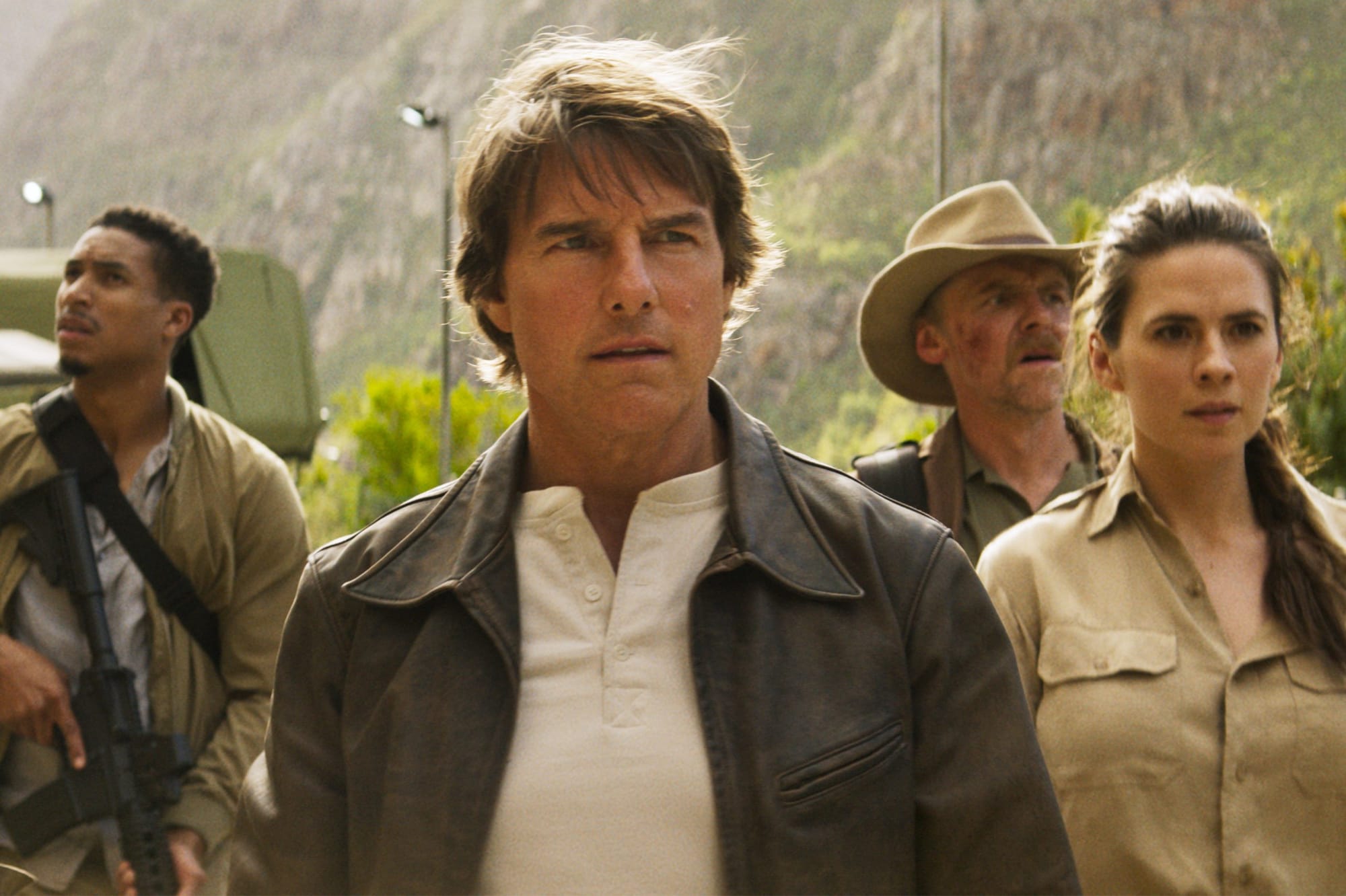
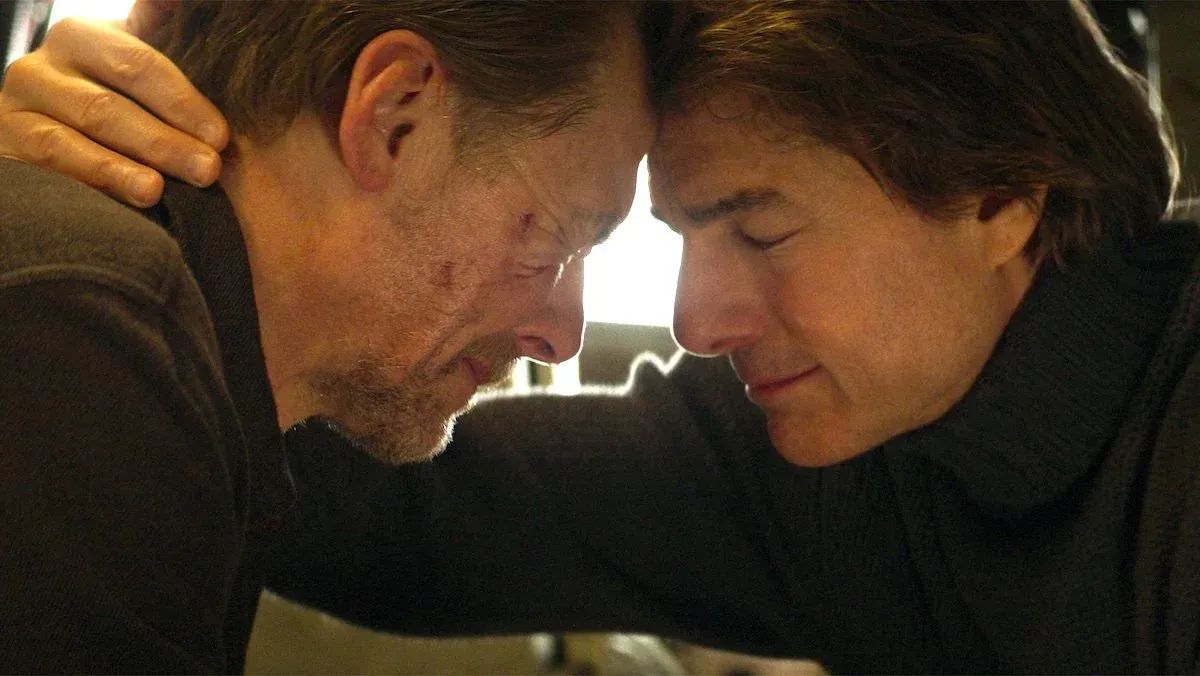
It's technically a sequel, but the closest and most rousing example of a big budget film proposing not just a future, but an ethos for that future, a guiding principle outside of religion, conservatism, or some other old theory, was actually Mission Impossible: The Final Reckoning. No, I am not joking.
This film was, yes, the epitome of a legacy sequel, bringing back old storylines and characters and reweaving them into yet another "formulaic" action film, but as true MI-heads know, Mission Impossible has no allegiance to it's predecessors, and the formula really helps them tell some pretty novel stories. I won't spoil a damn thing - go and watch it. That's a film with a thesis for the future - what we owe each other, what community means, what having a sense of humanity and decency can actually cost you, and why you should pay that price anyway.
I left that theatre ready to make movies again. It was a call, direct from McQ, to look to your left and right, and lock arms with the people who love you, and refuse to give up. In the face of absolute and complete failure, powerlessness, 10000:1 odds, try anyway. The trying is the only way we can hope to succeed.
Reader, if you are a creative, you don't need to do anything fancy. Write your thoughts, pick up a camera and capture clips or pictures that inspire you - document this time. Catalogue it. Then, in the pieces you grasp, try and find what a good future would mean for you.
Don't let the doomers get you down, or limit your scope. Don't let them make it all seem hopelesss. Dream big. Dream so big we beat the bastards.